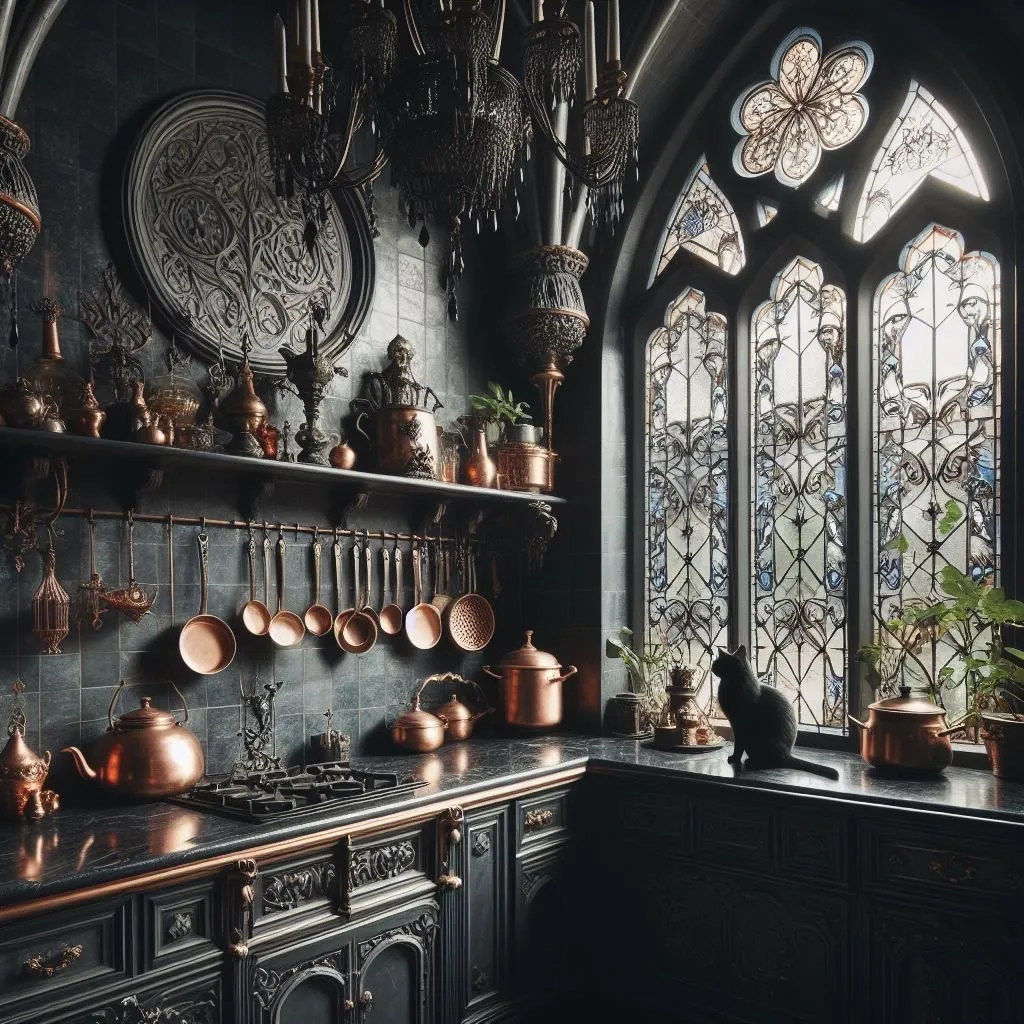
What is Gothic Kitchen Decor?
Gothic kitchen decor embraces the mystique and drama of the Gothic architectural style, translating it into the heart of the home. It’s about creating a space that’s both elegant and evocative, drawing inspiration from the grand cathedrals and castles of the Gothic era. This style is characterized by its bold use of dark colors, ornate details, and dramatic lighting, offering a unique aesthetic for those who appreciate a touch of the macabre and a flair for the dramatic. A gothic kitchen decor transforms an ordinary cooking space into a captivating environment, offering a unique aesthetic for those with a penchant for the extraordinary. It’s an opportunity to craft a space that exudes history, mystery, and a touch of luxury, making every meal preparation an experience. Imagine stepping into a kitchen where shadows play with light, and every corner tells a story, where the ambiance is as rich and captivating as the food prepared within.
Key Elements of Gothic Style in Kitchens
The core of gothic kitchen design hinges on several key elements that work together to create its distinctive ambiance. The incorporation of dark, rich color palettes is fundamental, providing a somber backdrop that highlights the other design features. Rich wood tones, often seen in cabinetry and furniture, add a layer of warmth and depth, balancing the coolness of darker colors. Ornate details, such as carved moldings, arched doorways, and wrought iron accents, are crucial, reflecting the architectural motifs of the Gothic period. The interplay of these components creates a cohesive and immersive gothic kitchen that truly captures the style’s unique essence. The strategic blending of these elements is essential in crafting a gothic kitchen ambiance, one where history, mystery, and a touch of luxury come together to make every meal preparation an experience.
Dark Color Palettes

Dark color palettes form the foundation of any gothic kitchen decor, setting a dramatic and mysterious tone. Deep shades such as charcoal gray, midnight blue, and, of course, black, create a captivating backdrop. These colors are not only visually striking but also enhance the richness of other design elements. When selecting dark colors, consider the natural light available in your kitchen. If the space lacks sufficient natural light, it is important to utilize lighting fixtures strategically to offset the darkness and prevent the room from feeling too enclosed. Dark colors can be used on walls, cabinets, or even incorporated through accessories like tiles and backsplashes. The objective is to establish a moody atmosphere that feels both elegant and inviting. This approach creates depth, dimension, and visual interest, which is central to gothic design. The darker hues create a strong foundation, ready to be complemented by lighter elements and carefully selected accents.
Rich Wood Tones
Rich wood tones are essential in gothic kitchen decor to provide warmth and a natural contrast to the darker elements. Woods such as mahogany, walnut, and cherry are popular choices, offering deep hues that enhance the overall aesthetic. The wood can be incorporated through cabinetry, flooring, and furniture, providing a tactile richness and depth. The grain and texture of the wood add an element of organic beauty. To enhance the visual impact, consider using wood with ornate carvings or detailing, which is a hallmark of Gothic design. Moreover, the strategic use of wood can help to ground the space, ensuring that it feels balanced and welcoming. A combination of dark colors with rich wood creates an inviting kitchen ambiance.
Ornate Details & Architectural Features
Ornate details and architectural features are crucial in capturing the essence of Gothic style. Think about incorporating elements that evoke the grandeur of Gothic architecture, such as arched doorways, pointed windows, and intricate moldings. Detailed cabinet carvings, decorative hardware, and wrought-iron accents can further enhance the gothic atmosphere. These elements add visual interest and a sense of history to the kitchen. Consider adding a statement piece, such as a dramatic chandelier or a large, ornate mirror. The goal is to incorporate features that give the kitchen a unique and captivating character. Paying close attention to the architectural details and embellishments is essential to truly reflect the Gothic style, providing a sense of both elegance and sophistication. Every detail, from the hardware to the molding, should contribute to the overall gothic vibe, creating a visually stunning and immersive experience.
Incorporating Gothic Furniture

Selecting the right furniture is a key step in creating a gothic kitchen design. Consider furniture pieces that reflect the historical period, with solid construction, dark finishes, and elaborate detailing. Dining tables with intricately carved legs, chairs with high backs and rich upholstery, and sideboards with ornate designs are excellent choices. If space permits, adding a freestanding kitchen island with gothic accents can also enhance the design. The choice of furniture should harmonize with the overall design, providing both functionality and aesthetic appeal. When selecting furniture, prioritize pieces that blend style with practicality. These selections must enhance the gothic ambiance while ensuring the space is functional for everyday use. Antique or vintage furniture can often add character and authenticity. When furnishing a Gothic kitchen, balance is critical. Choose pieces that create visual interest, adding depth and texture to the space while maintaining a sense of harmony.
Selecting the Right Kitchen Cabinets
Choosing the right kitchen cabinets is one of the most significant design decisions in a Gothic kitchen. Opt for cabinets with dark finishes, such as black, deep gray, or dark stained wood. Consider the style of the cabinets. Raised panel doors with ornate details are a classic choice, as they complement the Gothic aesthetic perfectly. If your kitchen space allows, incorporate design elements like arched cabinet doors or decorative corbels to enhance the visual interest. The hardware on your cabinets should also reflect the theme, with wrought iron or antique brass finishes working particularly well. Prioritize quality construction and materials to ensure your cabinets stand the test of time. The cabinets set the foundation for the entire design scheme, so they should reflect the dark, dramatic, and detailed aspects of the gothic design. Ensure that the color, style, and hardware of the cabinets harmonize to create an immersive gothic experience.
Choosing Gothic-Inspired Countertops
Countertops can greatly influence the overall ambiance of a gothic kitchen. Select materials that complement the dark color palette and contribute to the feeling of luxury. Granite countertops in dark shades like black, charcoal gray, or even deep green can provide a dramatic effect. Consider using marble with bold veining, which adds a touch of elegance and sophistication. For a more budget-friendly option, opt for quartz countertops in dark tones, as they are durable and can mimic the look of natural stone. The edge profiles of your countertops can also enhance the gothic vibe. Beveled or ogee edges can add intricate detail, while a waterfall edge on an island can create a sleek, modern gothic aesthetic. Whatever material you choose, the goal is to select countertops that blend both functionality and style, adding to the dark allure of the Gothic kitchen decor.
Gothic Kitchen Decor Accessories

Accessories are essential for adding the finishing touches to your gothic kitchen. Choose items that reflect the style’s dramatic aesthetic and add character. Display antique candlesticks, ornate mirrors, and wrought iron accents. Incorporate dark-colored dishware and glassware, along with metallic details in silver or pewter. Adding artwork that complements the theme can also enhance the ambiance. Decorative elements such as antique clocks, vintage spice racks, or even a vintage butcher block can be incorporated to further the gothic aesthetic. Consider incorporating elements that are functional and aesthetically appealing, such as unique serving platters and decorative storage jars. Accessories should be carefully selected to integrate seamlessly with the other elements of the room, contributing to the overall design. The aim is to blend functionality with beauty, creating an environment that is both visually interesting and functional.
Lighting Fixtures for Gothic Kitchens
Lighting is an essential component of Gothic kitchen decor, playing a critical role in setting the mood. Choose lighting fixtures that enhance the darkness and create a dramatic atmosphere. Chandeliers with wrought iron or antique brass details are ideal choices, often paired with candelabra-style bulbs to give a soft, flickering light. Consider installing sconces with dark, ornate designs. You can also add pendant lights over the kitchen island or dining area. The choice of lighting should complement the existing color palette and architectural features. Furthermore, strategically placing spotlights or dimmable lights can highlight key features of the kitchen, creating depth and drama. The aim is to integrate lighting elements that are both practical and aesthetically pleasing, enhancing the space’s mysterious and captivating mood.
Adding Gothic Accents and Decor
To enhance the gothic atmosphere, incorporate carefully chosen accents and decor elements. Display antique books, vintage maps, and artwork with dark, evocative themes. Consider adding wrought iron or antique brass hardware to your cabinets and drawers. Use Gothic-inspired patterns such as fleur-de-lis or gothic arches in textiles or wallpaper. Incorporating themed items is a fantastic way to add detail and uniqueness to the space. Consider adding a decorative fireplace mantel or a gothic-style mirror to reflect light and expand the space. The details you choose should reflect the design while bringing a sense of harmony to the space. These accents should reflect the style’s dramatic aesthetic and tie together the room’s different elements. These thoughtful touches help create a cohesive and captivating Gothic kitchen experience.
Textiles and Fabrics in Gothic Kitchens

Textiles and fabrics can play a significant role in complementing the gothic decor. When selecting fabrics, consider rich textures and dark, luxurious materials. Velvet and damask are excellent choices for drapery or upholstery, adding both softness and elegance. Patterns, such as brocade or gothic-inspired prints, can enhance the overall theme. Consider using deep colors, such as burgundy, deep greens, or charcoal grays, in your textiles to match the color palette. If you have a dining area in the kitchen, use fabric tablecloths and napkins to add to the space’s sophistication. Ensure that all your textiles blend with the other elements, ensuring cohesion and continuity throughout the space. The right textiles can create a warm and inviting ambiance, counterbalancing the darker elements and adding depth to the space. By carefully integrating textiles, you can effectively balance aesthetics and comfort, enriching the overall gothic theme.
Creating a Spooky Ambiance
Crafting a spooky ambiance is at the core of Gothic design. To achieve this in your kitchen, focus on details that evoke mystery and drama. Use dim lighting to create shadows, adding to the room’s mystique. Display gothic-themed artwork or decor, such as antique portraits or spooky figurines. The colors and materials should create a sense of visual intrigue. Consider incorporating natural elements, like dried flowers or branches, to add an organic touch to the eerie theme. Use flickering candles to create a sense of magic. With these elements in place, your gothic kitchen becomes more than just a cooking space, becoming an immersive experience that reflects a dark aesthetic.
Incorporating Gothic Decor with Modern Elements
Blending gothic decor with modern elements allows you to create a kitchen that feels both stylish and timeless. Consider incorporating sleek, modern appliances to contrast with the gothic details. Integrate a minimalistic kitchen island with gothic hardware to combine the styles. Using a combination of antique furniture with modern seating can create a fusion of time periods. The key is to balance the old and the new, ensuring the space feels cohesive and well-designed. Consider combining modern lighting fixtures with gothic architectural features to bring an interesting blend. This design approach allows you to create a unique and stunning kitchen space that reflects your personal style. It will add character and maintain a contemporary edge that will make the kitchen stand out.