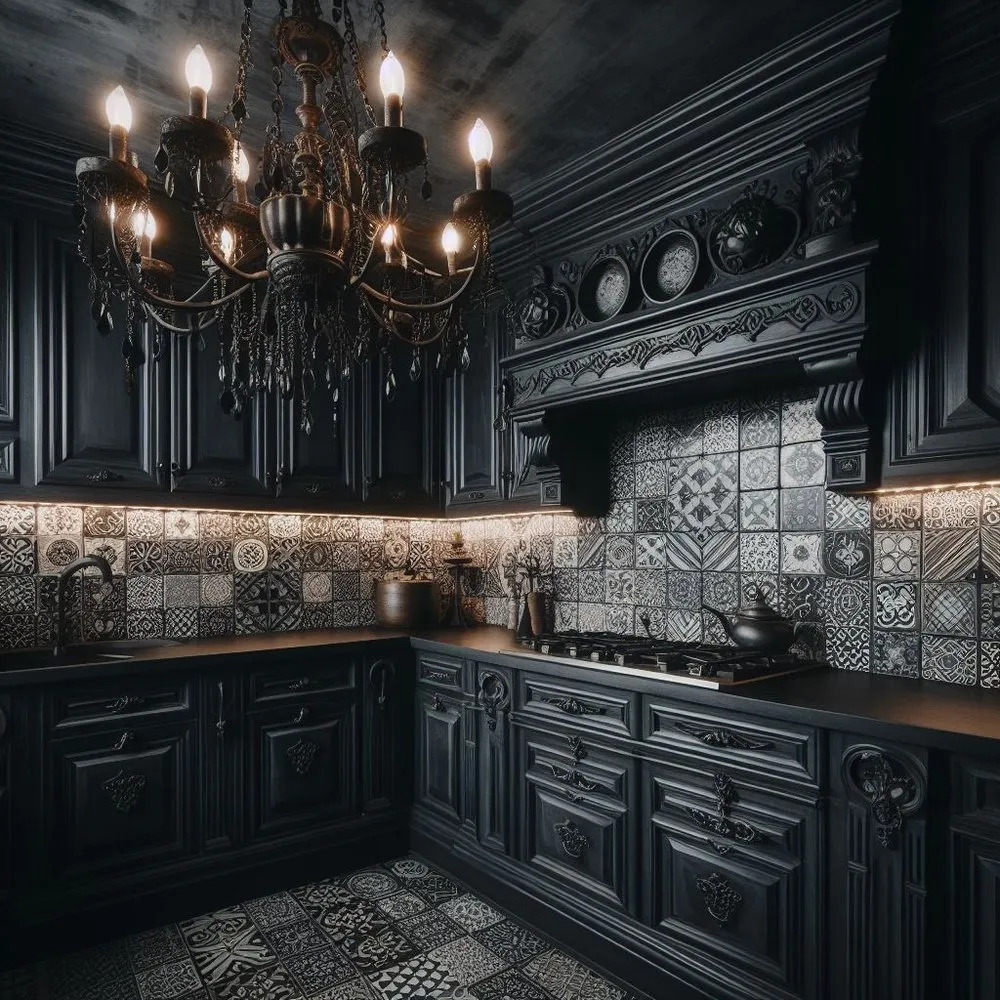
What is Gothic Kitchen Decor
Gothic kitchen decor embraces the mystique and drama of the Gothic architectural period, translating its unique aesthetic into the heart of your home. It’s a style that favors a moodier, more romantic atmosphere, moving away from the light and airy kitchens that have dominated design trends for a while. This style is characterized by dark colors, ornate details, and an emphasis on creating a sense of timeless elegance. It’s not just about dark colors; it’s about creating an environment that feels both opulent and subtly mysterious. The Gothic kitchen decor style is a bold statement. It’s for those who love to embrace the darker side of design. This style allows homeowners to create a space that’s as functional as it is aesthetically captivating, where the kitchen becomes a place of refuge, a showcase of personal style, and a testament to the enduring appeal of Gothic design.
Key Elements of Gothic Style
Understanding the core elements of Gothic style is essential for successfully incorporating this aesthetic into your kitchen. Key characteristics include the use of dark, rich colors, which form the foundation of the design. Think deep blacks, charcoal grays, and burgundy, as well as forest greens. The gothic style is also known for its elaborate detailing, often seen in the ornate carvings and designs on furniture, cabinetry, and architectural elements. Consider arched doorways, pointed arches, and intricate molding, all of which are hallmarks of gothic architecture. Furthermore, the use of dramatic lighting plays a crucial role. Chandeliers, sconces, and candlelight can create a sense of mystery and allure, which is further enhanced by the incorporation of luxurious textures, such as velvet, leather, and heavy brocades. These textures add depth and richness to the space, complementing the dark color palette. It is important to incorporate accessories like wrought iron, stained glass, and antique mirrors, which can also enhance the gothic style.
Dark Color Palette

A dark color palette is the cornerstone of Gothic kitchen decor, setting the tone for the entire space. The key is to embrace deep, moody hues. Black is a staple, providing a dramatic backdrop that can make the space feel both intimate and sophisticated. Charcoal gray is another excellent choice. It offers a softer approach while still maintaining the Gothic aesthetic. To add depth and warmth, consider incorporating colors like deep burgundy, forest green, and even navy. These colors work well as accent colors or as primary colors for walls or cabinetry. The strategic use of color is vital, because too much darkness can make a space feel cramped. Use lighter colors to break up the darkness, such as creams, or even metallics like gold or silver to provide contrast. Balance is key when using a dark color palette. Ensure the space does not feel overly dark or oppressive; incorporate colors, lighting, and textures to create a balanced and inviting atmosphere.
Incorporating Dark Paint Colors
When it comes to incorporating dark paint colors into your Gothic kitchen, start by considering which surfaces you want to paint. Walls are the most obvious canvas, and a deep black, charcoal, or a rich burgundy can immediately set the Gothic tone. If you’re hesitant to paint all the walls, consider an accent wall to add a touch of drama without overwhelming the space. Think about the finish of the paint. Matte finishes absorb light and enhance the moody atmosphere, while a satin finish offers a slight sheen that can reflect the lighting, adding a touch of elegance. Before committing to a color, test paint samples in different areas of your kitchen and observe them at various times of day. Natural light and artificial lighting can affect how the colors appear, so it’s essential to ensure you’re happy with the shade under all conditions. Using dark colors on cabinetry will also achieve a similar effect, especially if you have a neutral wall color, this will make the cabinetry be the focal point.
Using Dark Wood Finishes
Dark wood finishes are another crucial element of Gothic kitchen decor, creating a sense of depth and richness. Dark-stained wood cabinets, furniture, and even flooring will enhance the gothic look. The type of wood is a factor to consider when choosing dark wood. Dark, dense woods like mahogany or walnut can provide a luxurious look and feel. If you’re working with existing wood elements, consider staining them a darker shade to achieve the desired gothic aesthetic. For example, you can take light-colored cabinets and stain them a deep ebony or a rich espresso, transforming the look of your kitchen. When selecting the finish, think about what best suits the style you want to create. A matte finish gives a more dramatic and historical look, while a glossy finish can add elegance. Dark wood also works well with other Gothic elements, such as wrought iron hardware, and ornate detailing, creating a cohesive and visually striking space.
Dramatic Lighting

Lighting is key in creating the gothic aesthetic, where the goal is to set a dramatic mood and highlight the architectural details. The type of lighting is important when designing your kitchen to be gothic. Chandeliers are a staple. A wrought-iron or ornate crystal chandelier can serve as the focal point of the kitchen. Consider adding wall sconces, either side of the sink or in other areas, which can provide ambient lighting while enhancing the gothic atmosphere. The placement of these elements is also important. Place the lighting in areas that will illuminate the key features of your kitchen, such as the countertops or the cabinetry. You can also use a dimmer switch to control the brightness and set the mood as needed. Layering lighting will create depth and visual interest, with the use of a mix of overhead lighting, task lighting, and ambient lighting to create a comprehensive lighting scheme.
Chandeliers and Sconces
Chandeliers and sconces are the heart of Gothic kitchen lighting, providing both functionality and style. When choosing a chandelier, look for designs that are ornate and visually striking. A wrought-iron chandelier with candle-style bulbs is ideal. Alternatively, a crystal chandelier can add a touch of luxury, especially if it features dark metal accents. Wall sconces can enhance the gothic aesthetic by providing ambient lighting. Choose sconces with dark metal finishes, such as wrought iron or bronze, and select shades made from materials that diffuse light softly. Consider using sconces with candle-style bulbs or those that mimic the look of candlelight. This layering effect will create a multi-dimensional lighting scheme, enhancing the overall gothic feel.
Candlelight and Ambient Lighting
Candlelight and ambient lighting are the finishing touches that add to the Gothic kitchen decor, enhancing the atmosphere. Candles can be incorporated in various ways. Use candelabras, candlesticks, or even strategically placed pillar candles to add a warm glow and a sense of mystery. Place candles on countertops, shelves, or even inside decorative lanterns to enhance the ambiance. Beyond candles, consider the use of low-wattage bulbs and lamps to create a warm and inviting atmosphere. Soft, diffused lighting, such as the light from a strategically placed table lamp, can enhance the dramatic effect. Incorporate dimmers to adjust the lighting intensity based on the time of day or the mood you want to create. Combine all types of lighting to create a sense of depth and visual interest. This layering effect helps enhance the gothic feel by creating an inviting space.
Gothic Kitchen Decor with Furnishings

Selecting the right furnishings is crucial for creating a cohesive Gothic kitchen design. The furnishings should complement the dark color palette and ornate details that define this aesthetic. When choosing furniture, consider the style of the cabinets, the hardware, and the accessories. Choose furniture that is made of dark wood or metal. Look for pieces with ornate carvings, and details that reflect the gothic aesthetic. The key is to create a harmonious blend of style and function, where each piece complements the other elements, thus creating a kitchen that feels cohesive and inviting. Think of dining tables, chairs, or kitchen islands that can enhance the gothic design of the kitchen. This can involve creating a sense of warmth and comfort by incorporating elements that add to the gothic decor.
Choosing Gothic-Style Cabinets
Cabinets are a major part of any kitchen’s design. When selecting Gothic-style cabinets, look for designs that showcase traditional elements, such as arched doors, ornate carvings, and dark wood finishes. Consider the cabinet material. Dark wood finishes, such as mahogany, walnut, or ebony, will add depth and drama to your kitchen. If you choose a lighter wood, you can always stain it a darker shade to fit the gothic style. The cabinet hardware can enhance the look. Wrought iron or antique-style pulls and knobs can add to the aesthetic. Other elements to consider are the style of the cabinet doors. Arched doors or doors with elaborate panels add visual interest. When designing your kitchen, focus on these elements, creating a functional and stylish space.
Selecting Gothic-Inspired Hardware
Hardware is a key element in bringing the gothic kitchen to life, adding the details that make the space unique. The hardware can enhance the overall aesthetic. When choosing the right hardware, think about the material. Wrought iron is a classic option, adding a touch of elegance and a sense of history. Look for hardware with ornate designs, such as fleur-de-lis or other Gothic-inspired motifs. Other materials to consider are antique bronze, or pewter, which can add a vintage touch. The style of the hardware will make the difference. Pulls, knobs, or handles with intricate details and elegant designs can add character and enhance the gothic look. Hardware is an important consideration. When choosing the hardware, always test a variety of hardware options, and see how they look in your kitchen, and how they work with the overall design.
Adding Gothic Kitchen Decor with Accessories

Accessories are the finishing touches that bring the Gothic kitchen to life. Choose items that reflect the gothic aesthetic and complement the overall design. The accessories can enhance the gothic ambiance by adding visual interest, and depth. When choosing accessories, think about incorporating items that add a gothic look. Decorate with wrought iron pieces, such as candle holders, or sculptures. Incorporate antiques, such as antique mirrors, or vintage serving dishes. The placement of these accessories is as important as the items themselves. The gothic decor is all about creating a space that is both functional and beautiful. With the right accessories, you can create a kitchen that reflects your personal style, and a sense of timeless elegance.
Unique Gothic Decor Items
Incorporating unique Gothic decor items adds personality to your kitchen. Seek out antiques, vintage items, and items that reflect your style. Look for antique mirrors, with ornate frames, to add depth and reflect light. Consider incorporating wrought iron pieces, such as candle holders, or sculptures. Vintage serving dishes, or antique silverware can also add a sense of history. When incorporating these items, place them strategically to draw the eye and enhance the space. These items should be placed with care, so that the items don’t seem cluttered, but are instead used to enhance the gothic ambiance.
Textiles and Fabrics
Textiles and fabrics can soften the look of your Gothic kitchen, introducing color, texture, and a sense of comfort. Choosing the right textiles will add to the aesthetic, which will make the space more inviting and add to the overall design. From curtains to cushions, the fabrics you choose should create visual interest and complement the gothic atmosphere. Select fabrics in rich textures, such as velvet, brocade, or damask. These fabrics will add a sense of luxury and drama. Focus on colors that match the color palette, or use patterned fabrics with gothic motifs to enhance the space. Combine the fabrics strategically, and make sure they match the aesthetic of the overall design. Ensure you are incorporating fabrics that will enhance the design, and bring together the look of your kitchen.
Adding Gothic Kitchen Decor with Textiles

Textiles can enhance the gothic aesthetic of your kitchen, adding color, texture, and a sense of drama. Curtains are an easy way to soften the space. Choose curtains made of velvet, or heavy brocade fabrics in deep, rich colors, such as black, burgundy, or forest green. They can add to the atmosphere, as well as enhance the overall design of the space. Cushions and throws are another great way to incorporate textiles. Place them on your dining chairs, or in your kitchen seating area. You can add cushions with gothic motifs, such as fleur-de-lis, or gothic arches. Consider table linens, which can also enhance the gothic aesthetic. Choose a tablecloth made of a rich fabric, such as velvet or damask, in a deep color. Combine them with coordinating napkins and placemats, to create a cohesive look.
Incorporating Gothic-Inspired Fabrics
Incorporating gothic-inspired fabrics is a great way to enhance the look of your kitchen. Look for fabrics with gothic motifs, such as fleur-de-lis, gothic arches, or medieval patterns. You can also use fabrics with rich textures, such as velvet, brocade, or damask, which add a sense of luxury and drama. When choosing fabrics, consider the color palette of your kitchen. You can incorporate fabrics in deep, rich colors such as black, burgundy, or forest green. These fabrics will make the gothic aesthetic more cohesive. Select fabrics strategically and combine them to create a coordinated look. By incorporating these fabrics, you can transform your kitchen into a gothic space.
Combining Gothic Decor With Functionality
When designing a gothic kitchen, it is important to combine gothic decor with functionality, creating a space that is both stylish and practical. The goal is to merge the aesthetic with functionality. Start by thinking about the functionality of your kitchen. Optimize the space for the tasks you will perform in the kitchen, whether that be cooking, or entertaining. Choose gothic elements that also offer practical solutions, such as cabinets with ample storage. Consider installing a kitchen island, to use as a workspace, or as a place to display gothic accessories. Incorporate lighting to brighten the space, and complement the design. By focusing on both the gothic aesthetic and functionality, you can create a kitchen that meets your needs.
Gothic Kitchen Decor for Modern Kitchens

Gothic elements can be incorporated into modern kitchens, creating an innovative and stylish design. You can embrace the gothic aesthetic by adding dark colors, such as charcoal gray, or deep black. You can also incorporate gothic elements, such as wrought iron lighting. Choose modern cabinets, and add gothic-inspired hardware. Use a combination of old and new to create a cohesive look. A modern gothic kitchen balances the classic gothic elements with modern, practical design. This combination offers the opportunity to create a kitchen that is both stylish and functional. This design provides a unique and stylish aesthetic, which is perfect for any modern home.
How to Maintain Gothic Kitchen Decor
Maintaining your Gothic kitchen is important to preserve its beauty. Since this decor often features dark colors and intricate details, it’s important to develop a cleaning routine. Dust regularly to prevent the buildup of dust. Use a soft cloth, and a mild cleaner for surfaces. Clean hardware regularly. Many gothic elements, such as wrought iron, can be vulnerable to rust. Wipe down frequently. Polish dark wood surfaces. Use wood cleaner to help keep your kitchen looking its best. By maintaining the elements of your gothic kitchen, you can extend the life of your decor.