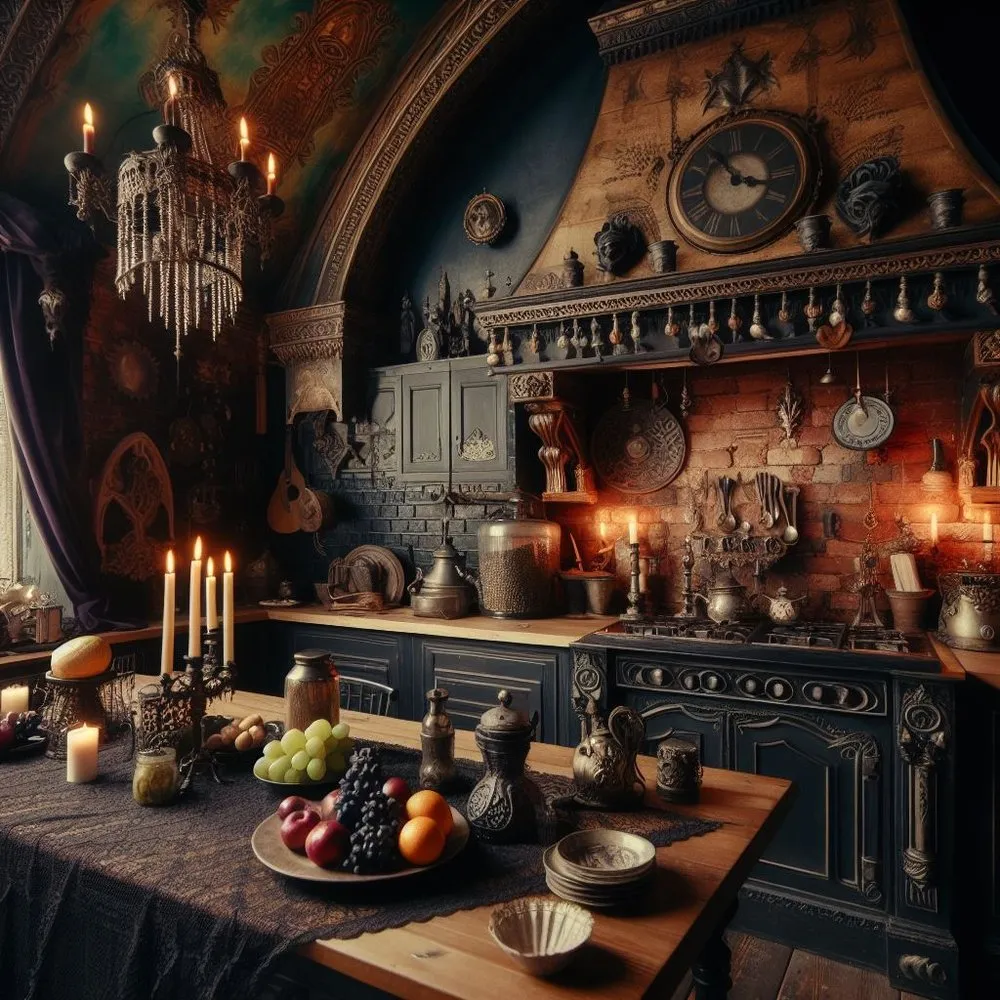
What is Gothic Kitchen Decor?
Gothic kitchen decor is a unique and dramatic style that draws inspiration from the architecture and aesthetic of the Gothic period, which flourished in Europe from the mid-12th century to the 16th century. This style is characterized by its dark, mysterious, and opulent elements, creating a space that is both elegant and edgy. It often incorporates features such as arched doorways, ornate details, and a rich color palette to evoke a sense of grandeur and timelessness. Gothic kitchens provide a striking contrast to the more common modern and minimalist kitchen designs, offering a bold statement for those who appreciate a touch of history and dramatic flair in their home.
The History of Gothic Style
The Gothic style originated in the mid-12th century in Europe, primarily in architecture. It evolved from the Romanesque style, introducing innovations such as pointed arches, ribbed vaults, and flying buttresses, which allowed for taller, more intricate structures. This architectural style quickly spread across Europe, influencing the design of cathedrals, castles, and other important buildings. The Gothic aesthetic is known for its verticality, intricate detailing, and the use of stained glass windows to create dramatic lighting effects. The romanticism and the mystique associated with the Gothic period continue to inspire designers and homeowners to this day, making it a popular choice for those seeking a distinctive and evocative interior design style.
Elements of Gothic Kitchen Decor

Several key elements define the Gothic kitchen decor style. These elements work together to create a cohesive and immersive aesthetic. The color palette is often dark and moody, with deep hues like black, burgundy, and deep blues dominating the space. Intricate architectural details, such as arched doorways, ornate moldings, and decorative panels, are also common. Furthermore, Gothic kitchens frequently incorporate luxurious materials like dark woods, stone, and metal to add depth and visual interest. Lighting plays a crucial role, with the use of chandeliers, sconces, and pendant lights to create a dramatic atmosphere. The overall goal is to create a kitchen that feels both elegant and mysterious, a space that evokes the romanticism and grandeur of the Gothic era.
Dark Color Palettes for a Gothic Kitchen
The color palette is at the heart of any Gothic kitchen design. Dark and rich colors are essential to set the desired atmosphere. Deep blacks, charcoal grays, and brooding browns are excellent choices for cabinets and walls. These colors create a sense of depth and sophistication. Accent colors like burgundy, deep blues (such as navy or indigo), and even emerald greens can be introduced to add a touch of drama and contrast. These accent colors can be used in the form of decorative accessories, backsplashes, or accent walls. When choosing a color palette, it’s important to consider the natural light in the kitchen and use lighter shades in areas that need brightening to prevent the space from feeling too enclosed.
Choosing the Right Cabinetry
Cabinetry is a central element in the design of a Gothic kitchen. The style often features cabinets with intricate details and dark finishes. Consider cabinets made from dark wood or with dark wood stain to contribute to the overall aesthetic. If you want a modern twist, you can opt for cabinets painted in black or a very dark color, such as charcoal gray. The style of the cabinetry should reflect the Gothic theme, with elements such as arched doors, raised panels, and ornate carvings. The hardware you select, such as handles and knobs, should complement the style of the cabinets, with options including wrought iron, antique brass, or other metal finishes that enhance the overall Gothic feel. Cabinetry should be both functional and aesthetically pleasing.
Dark Wood Finishes

Dark wood finishes are a staple in Gothic kitchen design, as they bring warmth and richness to the space. Woods like mahogany, walnut, or even dark oak, when stained or finished properly, contribute a sense of luxury and depth. These woods can be used for the cabinets, creating a sophisticated look that is true to the Gothic era. The grain patterns and textures of the wood add an element of natural beauty, contrasting with the often-ornate hardware. The dark wood finishes can be complemented by adding elements made from natural stone, which creates an earthy atmosphere.
Embracing Black Cabinets
Black cabinets provide a very bold statement in a Gothic kitchen, providing a dramatic and modern twist on the classic Gothic style. When executed correctly, black cabinets can make the kitchen feel exceptionally elegant and mysterious. To avoid a sense of heaviness, it’s essential to balance the black with lighter elements, such as a light-colored backsplash, stainless steel appliances, or a marble countertop. Proper lighting is crucial when incorporating black cabinets, as it can help to reflect light and prevent the kitchen from feeling too dark. You can achieve this by incorporating pendant lights, under-cabinet lighting, or even a chandelier. Black cabinets are an impactful way to achieve a chic Gothic kitchen look.
Gothic Kitchen Hardware and Fixtures
Hardware and fixtures play an important role in the look and feel of a Gothic kitchen, adding intricate details and a touch of elegance. These elements can enhance the overall aesthetic. You can achieve the desired look by choosing hardware with ornate designs, dark metal finishes, and classic shapes. Fixtures like faucets, sinks, and lighting should also align with the Gothic theme. Wrought iron, antique brass, and dark bronze are excellent choices for cabinet pulls, handles, and knobs. These materials offer a sense of authenticity and can draw attention to the cabinets. In addition to this, the fixtures should complement the other elements in the kitchen.
Elaborate Cabinet Pulls and Knobs

Elaborate cabinet pulls and knobs are a defining feature of Gothic kitchen design. Opt for pieces that feature intricate designs, such as fleur-de-lis, gothic arches, or other historical patterns. Dark metal finishes, such as wrought iron or antique bronze, work perfectly with this style. The choice of cabinet pulls and knobs adds an elegant touch that complements the overall aesthetic. Choosing these details can create a kitchen that is stylish and full of character. Remember that these details are essential in the design and are part of the overall design.
Ornate Faucets and Sinks
Ornate faucets and sinks can add an authentic Gothic feel to your kitchen. Look for faucets that have elaborate details, such as scrolled designs or dark metal finishes. Consider sinks made from materials such as cast iron or copper, as these choices blend well with the Gothic aesthetic. Choosing a faucet with a classic bridge design, which features two separate handles connected by a central spout, can add an authentic touch. You can also select a farmhouse sink, which is a classic style. When selecting the hardware and finishes for your sink and faucets, ensure they complement the other elements in your kitchen.
Adding Gothic Decor Elements
Adding Gothic decor elements can bring personality and style to your kitchen. These elements can be incorporated in a variety of ways, from artwork and mirrors to lighting fixtures. Consider these elements when you are designing your kitchen. Choosing the correct elements can help to create an immersive environment that reflects the character of the Gothic period. These additions are crucial for giving your kitchen a sense of authenticity and charm.
Incorporating Gothic Artwork and Mirrors

Gothic artwork and mirrors are essential elements in creating a cohesive aesthetic. Choose artwork that reflects the Gothic style, such as medieval tapestries, portraits, or religious scenes. The artwork should feature dark and dramatic subjects, complementing the overall mood. Gothic mirrors should have elaborate frames, such as those made from dark wood or metal, which can add depth and visual interest. Consider placing a large mirror to make the kitchen feel larger, adding a dramatic touch. Choosing the right artwork and mirrors can transform your kitchen into a stylish space, enhancing the Gothic theme.
Using Gothic-Inspired Lighting
Lighting can make or break the mood of a Gothic kitchen. Choose fixtures that complement the style. Chandeliers with dark metal finishes, ornate detailing, and candle-like bulbs are excellent choices. Pendant lights with gothic-inspired designs can also add a dramatic touch. Sconces with wrought iron or antique brass finishes can provide ambient lighting. Make sure to include under-cabinet lighting to illuminate the workspace. Lighting will help the space feel warm and inviting.
Selecting Gothic Furniture and Accessories
Choosing the correct furniture and accessories is essential in completing the Gothic kitchen design. These elements can include furniture like dining sets, bar stools, and accent pieces. Choosing furniture with dark wood, intricate carvings, and ornate details is the correct choice. The accessories that you select can enhance the Gothic theme. These choices add personality and depth to the space, making it a stylish and inviting place.
Choosing the Right Dining Set

When choosing a dining set, focus on elements that match the overall Gothic aesthetic. Look for a table and chairs made from dark wood, with ornate details. Consider a dining table with a carved base, paired with chairs that have high backs and elegant upholstery. The upholstery can be made from velvet or other luxurious fabrics, with dark colors that match the kitchen’s color scheme. If you have space, a large, rectangular dining table can enhance the drama of the design. You can also add a chandelier above the dining table to increase the gothic feel.
Accessorizing with Gothic Details
Accessorizing a Gothic kitchen allows you to bring in the final touches. Choose accessories that match the Gothic theme, like candelabras, ornate trays, and antique dishware. Displaying these items on open shelves or countertops can add personality to the kitchen. You can also add decorative elements such as gothic-inspired statues, busts, and tapestries. Other options include adding textured textiles, such as velvet curtains or tablecloths, to create a luxurious feel. The accessories enhance the Gothic theme.
Creating a Gothic Kitchen on a Budget
Creating a Gothic kitchen doesn’t require a huge budget. You can implement some cost-effective strategies. Instead of replacing the cabinets, consider repainting them in a dark color or using dark wood stain. Replace the existing cabinet hardware with ornate pulls and knobs to quickly update the look. You can also incorporate gothic elements using accessories such as artwork, mirrors, and lighting fixtures. When purchasing new items, search for affordable options at antique stores, thrift shops, or online marketplaces. DIY projects, such as creating your own artwork or repurposing old furniture, can reduce costs and allow you to personalize the design. With creativity and careful planning, you can create a stunning Gothic kitchen.
DIY Gothic Kitchen Decor Ideas

If you enjoy DIY projects, there are many ways to incorporate Gothic decor into your kitchen. One option is to create your own artwork, such as framed prints or paintings with Gothic themes. You can also create your own lighting fixtures by repurposing old chandeliers or adding decorative elements. Another DIY project involves crafting your own decorative accessories. For example, you can create a Gothic-inspired centerpiece for your kitchen table by arranging candelabras and antique-looking candlesticks. When starting your projects, check online for tutorials and inspiration. These projects can enhance the overall look of your kitchen. These DIY projects are a cost-effective way of incorporating the Gothic decor.
In conclusion, designing a Gothic kitchen offers a unique opportunity to create a space that is both elegant and mysterious. By incorporating dark color palettes, intricate details, and gothic-inspired elements, you can transform your kitchen into a striking and evocative environment. Whether you choose to embrace dark wood finishes, add elaborate hardware, or introduce gothic accessories, the key is to create a cohesive design that reflects the grandeur and romanticism of the Gothic era. With careful planning and a touch of creativity, you can achieve a Gothic kitchen that is both stylish and functional, offering a distinctive aesthetic for your home.