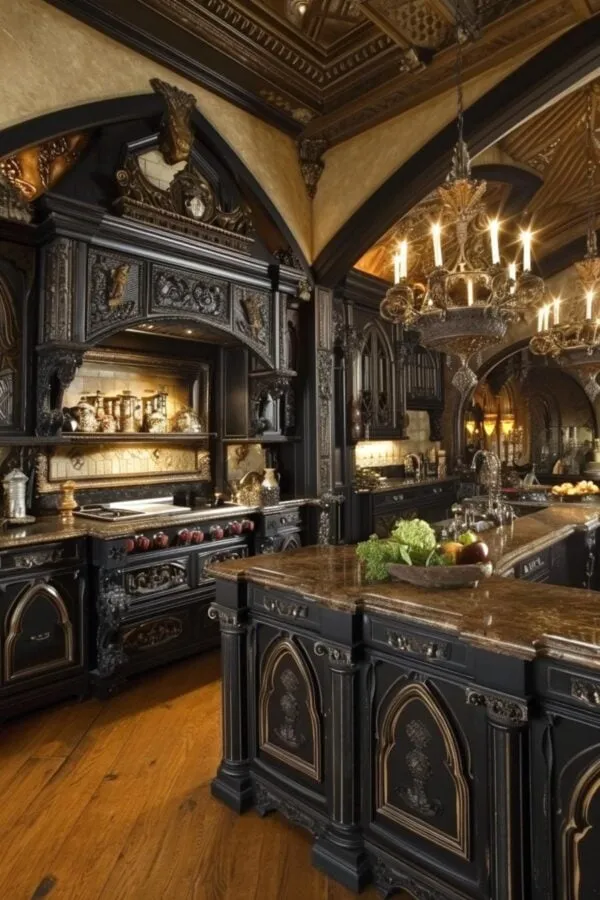
Gothic Kitchen Decor: Defining the Style
Gothic kitchen decor is a captivating blend of historical elegance and dramatic flair, drawing inspiration from the architecture and design of the Gothic period. It’s characterized by a unique aesthetic that embraces darkness, intricate details, and a sense of mystery. Unlike the bright, airy kitchens of contemporary design, Gothic kitchens often feature deep, rich color palettes, heavy furnishings, and ornate accents that create a space that is both opulent and inviting. This style is perfect for those who appreciate a touch of the macabre and want to create a kitchen that feels like a secret sanctuary.
Key Features of Gothic Kitchen Decor
Several key elements define the essence of Gothic kitchen design. Understanding these features is essential to successfully incorporating this style into your home. From the color schemes and architectural details to the choice of furniture and accessories, each aspect contributes to the overall dramatic effect. It’s a balance between creating a space that is visually stunning, functional, and reflective of the owner’s unique taste. The goal is to achieve a cohesive and immersive environment that transports you to a different era.
Dark Color Palettes and Their Impact

The heart of a Gothic kitchen lies in its bold use of color. Deep hues like charcoal, burgundy, forest green, and midnight blue form the foundation, creating a sense of intimacy and sophistication. These dark shades are often contrasted with lighter accents, such as silver, gold, or cream, to prevent the space from feeling overly heavy. Matte finishes are preferred over glossy ones, adding to the mysterious and historical vibe. Think of it as painting a canvas with shadows and highlights, where each color plays a crucial role in defining the character of the room.
Architectural Elements and Details
Gothic architecture is renowned for its dramatic elements, and these can be seamlessly integrated into your kitchen design. Consider incorporating features like arched doorways, ornate moldings, and exposed beams. If you’re renovating, adding a faux stone backsplash or a detailed plaster ceiling can instantly elevate the Gothic aesthetic. The emphasis is on intricate craftsmanship and a sense of grandiosity, even in the smallest details. These architectural elements provide a strong foundation for the rest of the decor.
Embracing Gothic Furniture and Fixtures
The furniture and fixtures you choose are crucial in bringing the Gothic style to life. Look for pieces with dark finishes, intricate carvings, and a sense of weight and history. Think about a large, imposing dining table with high-backed chairs, or a kitchen island with ornate legs and a dark countertop. Lighting fixtures are equally important, with wrought-iron chandeliers, sconces, and pendant lights adding a touch of drama. These elements, carefully selected, will transform your kitchen into a space that feels both luxurious and steeped in history. (See image: gothic-furniture.webp)
Valances in Gothic Kitchens

Valances can be a fantastic way to add a touch of Gothic flair to your kitchen. They offer a subtle yet effective way to introduce the style without overwhelming the space. The right valances can tie together other elements in the room, such as window treatments and color schemes, creating a more cohesive and visually appealing design. The selection of valances should complement the existing features of the kitchen, and with a little planning, they can contribute to the overall atmosphere of the room.
Selecting Gothic-Inspired Valances
When choosing valances for your Gothic kitchen, consider designs that reflect the architectural and decorative motifs of the period. Look for styles with pointed arches, fleur-de-lis patterns, or other classic Gothic symbols. The valances should be made from heavy, rich fabrics such as velvet, brocade, or damask. If you are aiming for a more subtle approach, consider valances with fringing, tassels, or intricate detailing that add a touch of elegance without being overly dramatic. Pay attention to the color of the valances, ensuring they complement the other dark tones present in your kitchen (See image: gothic-kitchen-valances.webp).
Materials for Gothic Kitchen Valances
The materials used for your valances can make a huge difference. Velvet is a classic choice, offering a luxurious feel and a rich appearance. Brocade and damask fabrics can add intricate patterns and textures that enhance the Gothic aesthetic. For a more rustic look, consider linen or even heavy cottons, but be sure to select colors and patterns that match the overall design. The choice of material not only impacts the visual appeal but also the feel of your kitchen. When selecting materials, ensure that they’re durable and easy to maintain, as they will need to withstand the rigors of daily use.
Styles and Designs of Gothic Valances

There are several design options when it comes to Gothic valances. Scalloped edges and pointed arches are directly inspired by Gothic architecture, providing a strong visual connection to the style. Valances with ornate trim, such as fringing, tassels, and beading, add a touch of luxury and sophistication. You can also choose valances with intricate embroidery or appliqués, featuring Gothic symbols or patterns. Remember to consider the size and shape of your windows when selecting a style, ensuring the valances complement the architecture and the other decor elements in your kitchen.
Incorporating Gothic Decor into Your Kitchen
Transforming your kitchen into a Gothic haven is more than just about choosing the right valances. It’s about thoughtfully incorporating various elements to create a cohesive and immersive experience. This includes selecting the right hardware, lighting, and textiles, all working in harmony to evoke the desired atmosphere. It’s important to consider every aspect of your kitchen decor to fully achieve a Gothic aesthetic. This requires planning and a keen eye for detail, which can result in a truly unique and stunning space.
Choosing the Right Hardware and Accessories
The hardware and accessories you choose can have a significant impact on the overall Gothic feel of your kitchen. Consider using wrought-iron or antique brass cabinet pulls and knobs. These materials evoke a sense of history and add an elegant touch. Look for accessories with dark finishes, such as pewter or blackened bronze. Candlesticks, ornate trays, and vintage-inspired kitchen utensils can enhance the Gothic ambiance. Small details, like these, contribute to a more cohesive and authentic design. (See image: gothic-kitchen-hardware.webp)
Lighting Fixtures and Their Role

Lighting is crucial in a Gothic kitchen, setting the mood and highlighting the architectural details. Choose fixtures that reflect the style, such as wrought-iron chandeliers, pendant lights with intricate designs, and sconces. Consider adding dimmer switches to adjust the lighting levels and create a more intimate atmosphere. Candles are also an excellent way to add a soft, flickering light that enhances the mysterious vibe. The interplay of light and shadow is a key characteristic of Gothic design, so choose your fixtures carefully. (See image: gothic-kitchen-lighting.webp)
Textiles and Fabrics for a Gothic Kitchen
Textiles and fabrics play a vital role in softening the hard lines and adding visual interest. Use heavy fabrics like velvet, brocade, and damask for your valances and window treatments. Consider adding fabric panels or upholstered chairs with dark, patterned fabrics. Rugs with intricate designs or dark, rich colors can also add to the atmosphere. When selecting textiles, consider the overall color palette and the textures that will enhance the Gothic feel of your kitchen. (See image: gothic-kitchen-textiles.webp)
Tips for a Cohesive Gothic Design
Creating a cohesive Gothic design requires attention to detail and a willingness to embrace the style’s inherent drama. It’s essential to consider the overall flow of the design, ensuring that all elements work together to create a unified look. This means carefully selecting your color palette, furniture, and accessories to ensure they complement each other and the architectural features of your kitchen. With the right planning, you can achieve a stunning and inviting Gothic kitchen.
Balancing Dark and Light Elements

While Gothic design embraces darkness, it’s important to incorporate lighter elements to prevent the space from feeling too heavy. Balance the dark colors with accents of silver, gold, or cream. Use light-colored countertops or backsplashes to brighten the space. Mirrors can also be used to reflect light and make the kitchen feel more spacious. The key is to create a balance that allows the dark colors to shine while preventing the space from feeling oppressive. (See image: gothic-kitchen-inspiration1.webp)
Adding Personal Touches and Accents
Personal touches are crucial in making your Gothic kitchen feel like home. Display antique items such as vintage cookware, ornate serving dishes, or old books. Incorporate artwork with Gothic themes or portraits. Add fresh flowers or greenery to soften the space and add a touch of life. These personal touches will add depth and character to your kitchen, making it unique and inviting. It’s important to create a space that reflects your personality and style.
Maintaining a Gothic Kitchen’s Atmosphere
Maintaining the Gothic atmosphere requires a little effort. Regularly dust and clean your furniture and accessories. Keep your color palette consistent and update elements as needed. Consider switching out accessories seasonally to keep your kitchen feeling fresh. Ensure your lighting is functioning properly and replace bulbs as needed. With consistent care, you can preserve the allure of your Gothic kitchen for years to come.
Conclusion: The Allure of Gothic Kitchens

Gothic kitchens offer a captivating alternative to more conventional designs. With their dramatic flair, rich color palettes, and historical details, they create a truly unique and unforgettable space. By carefully selecting your materials, furniture, and accessories, you can transform your kitchen into a stunning Gothic haven, adding a touch of elegance and mystery to your home. Embrace the darkness, the intricate details, and the sense of history, and create a kitchen that reflects your individual style. The result is a space that is as captivating as it is functional.