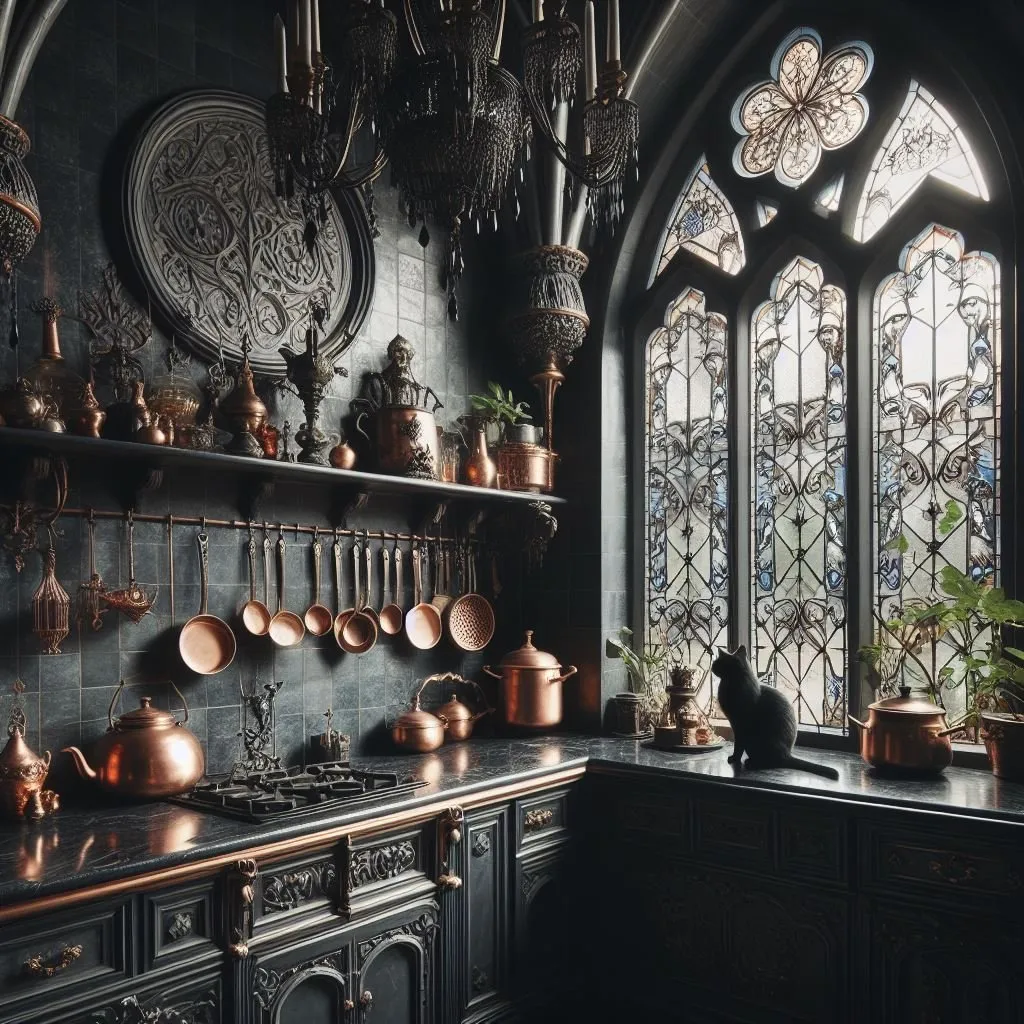
What is Gothic Kitchen Decor
Gothic kitchen decor embodies a dramatic and mysterious aesthetic, drawing inspiration from the architecture and artistic elements of the Gothic period. This style is characterized by its dark color palettes, ornate details, and a sense of grandeur. It’s a bold choice for those who want to infuse their home with a unique atmosphere. Unlike the bright, airy feel of modern kitchens, the gothic kitchen embraces shadows, textures, and a touch of the macabre to create a truly captivating space. The overall goal is to create a kitchen that feels both luxurious and slightly mysterious, a place where every element tells a story and evokes a sense of timeless elegance. This style allows for a personalized touch, offering a chance to express a love for history, art, and the darker side of beauty.
Key Elements of Gothic Kitchen Decor
Several key elements define the gothic kitchen style, which when incorporated thoughtfully, transform the space into a dramatic sanctuary. The core of gothic design is its use of rich, dark colors, particularly deep reds, blacks, and purples. Textured materials like wood, stone, and metal are also central to the look. Architectural details like arched doorways and intricately carved cabinetry can further enhance the gothic feel. Lighting also plays a crucial role; think of chandeliers, sconces, and candles. The use of decorative elements, such as ironwork, antique mirrors, and religious iconography, complete the gothic aesthetic. Careful consideration of these elements will ensure that your kitchen resonates with the dramatic and mysterious spirit of the Gothic era.
Color Palette for Gothic Kitchens

The color palette is fundamental in establishing the gothic atmosphere. Deep and moody colors are essential, as they set the stage for the dramatic aesthetic. Colors such as black, charcoal gray, deep burgundy, and forest green work well as base colors. These create a sense of mystery and sophistication. The key is to balance these dark shades with lighter accents, such as cream or antique white, to prevent the space from feeling too overwhelming. Using a monochromatic scheme with varying shades of the same color can also be effective. The choice of paint finish also matters; consider matte or satin finishes over glossy, which reflect more light. This focus on color creates the foundational layer of a gothic kitchen.
Dark and Moody Colors
Embracing dark colors in your kitchen creates the initial foundation for a gothic aesthetic. Black and charcoal gray are popular choices for cabinets, walls, or even kitchen islands. Deep burgundy and forest green can add layers of richness, especially when applied to walls or accent furniture. These colors reflect a sense of drama and mystery while providing a versatile backdrop for other gothic elements. The key to using dark colors is to use them strategically, balancing them with lighter elements to prevent the space from feeling too enclosed. Consider using dark colors on the lower cabinets or on an accent wall to create visual interest without darkening the entire space. The overall effect should be dramatic, not depressing.
Accent Colors to Consider
While dark colors form the basis, accent colors can add depth and complexity to the gothic kitchen. Metallic accents, like gold, silver, or copper, can be incorporated through hardware, light fixtures, or decorative objects, injecting a sense of luxury. Consider using touches of deep purple or emerald green for a pop of color in accessories like curtains, artwork, or dishware. Antique white or cream can offer a contrast against the darker hues, particularly for trim or upper cabinets. These accent colors provide contrast and visual interest, allowing the gothic elements to stand out. The use of accent colors should be strategic, enhancing the gothic aesthetic without overpowering the space.
Furniture Selection for a Gothic Kitchen

Furniture plays a crucial role in defining the gothic ambiance, and choosing the right pieces is essential for achieving the desired aesthetic. Look for pieces with intricate details, such as carved wood accents, arched designs, or wrought iron elements. Consider the materials, favoring dark woods like mahogany or walnut, as well as stone or metal. The style of furniture should be reminiscent of the Gothic period, reflecting a sense of history and elegance. Avoid overly modern or minimalist designs, as they can clash with the overall gothic aesthetic. The goal is to select furniture that reflects the timeless and dramatic character of the Gothic era.
Choosing Gothic-Style Cabinets
Cabinets are a central element in the gothic kitchen, setting the tone for the entire space. Choose cabinets with traditional gothic details, such as arched doors, ornate carvings, or elaborate hardware. Consider darker wood stains or painted finishes in deep colors like black, charcoal, or burgundy. The cabinet design can include features like raised panels, moldings, and glass-fronted sections to display decorative items. Hardware should complement the cabinets; antique bronze or wrought iron handles can add a touch of authenticity. These cabinets create the foundation of the gothic look. They are a key factor in achieving the desired aesthetic.
Selecting a Kitchen Island
A kitchen island can become a focal point, adding both functionality and style to the gothic kitchen. Opt for an island that reflects gothic design elements, such as a dark-stained wood with intricate carvings or a stone countertop. Consider adding a wrought-iron base or details like arched supports to reinforce the theme. The island can be painted in a darker color, to match the cabinets, or it can serve as an accent piece in a contrasting shade. Incorporate gothic-inspired details into the island design. It should be a functional space that also contributes to the dramatic gothic aesthetic.
Essential Gothic Decor Elements

Certain decorative elements are crucial for establishing the gothic ambiance. Lighting fixtures, such as chandeliers, sconces, and candles, play a central role in creating a dramatic atmosphere. Decorative accessories, like antique mirrors, wrought-iron pieces, and religious iconography, add layers of gothic influence. The careful selection of these elements can transform a space into a gothic haven. The right details, combined with proper lighting and color schemes, ensure that the gothic aesthetic is reflected throughout the space.
Lighting Fixtures for Gothic Kitchens
Lighting is a crucial aspect of the gothic style. Choose fixtures that reflect the mood and aesthetic, such as chandeliers, sconces, and pendant lights. Chandeliers with intricate designs or wrought-iron details provide a focal point and create a sense of grandeur. Sconces can be used to add ambient lighting, especially in dining areas or above countertops. Consider incorporating candles or candelabras to enhance the gothic atmosphere. Using dimmable lights allows for a customizable ambiance, setting the mood from dramatic to intimate. These gothic lighting choices contribute to the overall character of the kitchen.
Decorating Accessories
The right accessories can transform the kitchen, adding character. Include antique mirrors with ornate frames to reflect light and enhance the dramatic feel. Wrought-iron pieces, such as candle holders, pot racks, or decorative shelves, add authenticity. Religious iconography, such as statues or crosses, if in line with your aesthetic. Adding unique, gothic-inspired accessories creates a sense of drama and sophistication. The selection of accessories should be balanced to enhance the gothic style without overwhelming the space.
Textiles and Fabrics

Textiles can enhance the gothic kitchen’s ambiance. Select fabrics in deep, rich colors such as velvet or damask for curtains and upholstery. Patterns can include floral, or geometric designs. Texture is important; the use of woven or textured fabrics brings a sense of depth and richness to the space. These textiles should complement the other elements and contribute to the dramatic atmosphere of the gothic kitchen. The right selection of fabrics and textiles ensures that the gothic aesthetic is well-integrated within the kitchen.
Gothic Kitchen Decor: Putting It All Together
Creating a gothic kitchen is about blending specific elements to create a cohesive look. By carefully selecting the color palette, furniture, and decorative items, it’s possible to establish the desired dramatic ambiance. Consider starting with a few key pieces, like cabinets and lighting, and then add accessories to enhance the aesthetic. Remember to create balance; combining dark and light elements is key. The gothic kitchen should be a reflection of personal style, a space that’s both functional and visually stunning. With a thoughtful approach to design, the gothic kitchen becomes a luxurious and mysterious space.