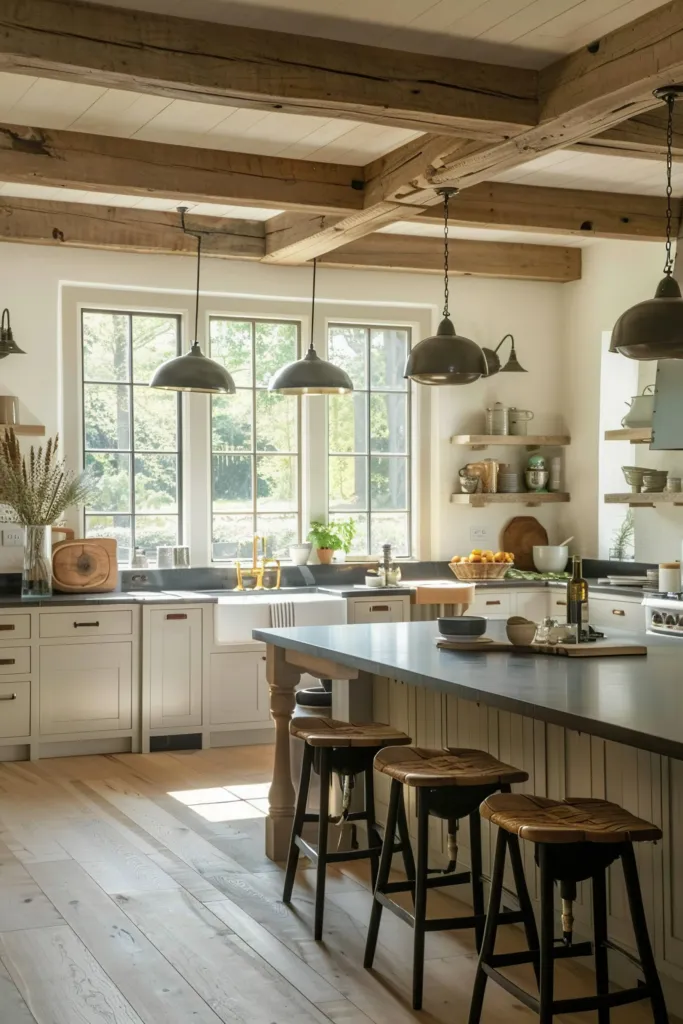
Understanding the Farmhouse Style
Farmhouse kitchen decor is all about creating a warm, inviting, and functional space that evokes the charm of a traditional country home. Rooted in a blend of rustic and practical design, this style emphasizes natural materials, vintage touches, and a sense of simplicity. The core of farmhouse style revolves around creating a comfortable and lived-in atmosphere, where the kitchen is the heart of the home. Think of the relaxed, welcoming feel of a classic country kitchen, where family and friends can gather and enjoy delicious meals. The beauty of farmhouse decor lies in its ability to seamlessly combine functionality with aesthetic appeal, offering a timeless design that feels both stylish and effortlessly cozy. This approach is about celebrating imperfections, embracing the beauty of age, and curating a space that feels authentic and personal.
Key Elements of Farmhouse Kitchen Decor
Several key elements define the farmhouse kitchen aesthetic. One of the most prominent is the use of natural materials, particularly wood. From exposed beams to rustic cabinets and butcher block countertops, wood brings warmth and character to the space. Another essential element is the color palette, which typically revolves around neutral tones such as whites, creams, grays, and soft pastels. These colors create a bright and airy feel, providing a perfect backdrop for the rustic elements. The addition of vintage or antique pieces is also crucial. Consider incorporating elements like a farmhouse sink, open shelving displaying vintage dishware, or a reclaimed wood dining table. These items add character and a sense of history to the kitchen. Functionality is another core component, ensuring that the space is practical and conducive to cooking and socializing. Finally, the overall aesthetic is one of simplicity, avoiding excessive ornamentation and embracing the beauty of understated design.
Color Palette and Finishes

The color palette is a cornerstone of farmhouse kitchen decor. The most common base colors are whites and creams, which brighten the space and create a clean, fresh foundation. These neutral tones can be complemented by softer shades of gray, beige, or light pastels like pale blues or greens. These colors add depth and visual interest without overwhelming the space. When choosing finishes, natural materials are key. Opt for wood cabinets and flooring, possibly with a weathered or distressed finish to enhance the rustic charm. Metals like iron and copper are also ideal for hardware, lighting fixtures, and decorative accents. These materials introduce a sense of authenticity. Consider using matte finishes rather than high-gloss, as they contribute to the relaxed and lived-in feel that defines farmhouse style. Mixing textures such as wood, stone, and textiles can create a visually dynamic and welcoming environment.
Choosing the Right Furniture
Furniture plays a crucial role in establishing the farmhouse kitchen aesthetic. The dining table is often the focal point, ideally made from reclaimed wood or with a distressed finish. Choose a large, rectangular table or a round one, depending on your space. Pair the table with chairs that have a classic, simple design. Consider wooden chairs with ladder backs or benches for a casual, inviting atmosphere. For kitchen islands, a butcher block countertop adds a touch of functionality and rustic appeal. If you have space, incorporate a cozy corner or breakfast nook with a small table and upholstered seating. When selecting furniture, prioritize pieces with simple lines and natural materials. Avoid overly ornate designs and instead, focus on items that feel comfortable and inviting. Look for pieces that have character and a sense of history, whether vintage or new with a distressed finish.
Adding Decorative Accents
Decorative accents are essential for infusing personality and charm into your farmhouse kitchen. Open shelving is a perfect opportunity to display vintage dishware, enamelware, and antique kitchen tools. Arrange items in an aesthetically pleasing way, mixing and matching different pieces to create visual interest. Rustic signs with charming quotes or farm-related imagery can add a touch of whimsy and personality. Display fresh flowers or potted herbs on countertops or windowsills to bring a touch of nature indoors. Wicker baskets are a great storage solution and add texture. Incorporate these baskets for storing pantry items or kitchen essentials. Textiles also play a role; place decorative tea towels with vintage patterns or embroidered details. The goal is to create a space that feels lived-in and collected over time, with each item telling a story. Do not overcrowd your kitchen. Select a few key pieces that will make the most impact.
Textiles and Soft Furnishings

Textiles and soft furnishings add warmth and coziness to the farmhouse kitchen. Opt for natural fabrics such as linen, cotton, and burlap. These materials have a tactile appeal that complements the rustic aesthetic. Use patterned dish towels, curtains, and tablecloths to introduce color and pattern. Consider incorporating vintage patterns, such as gingham, ticking stripes, or floral prints. These patterns contribute to the farmhouse feel. Window treatments should be simple and functional, often featuring light-filtering curtains or Roman shades made from natural materials. For seating, add cushions with neutral tones and textures. Consider adding a few patterned throw pillows or cushions for a pop of color. The aim is to create a comfortable and inviting atmosphere where guests feel encouraged to relax. Textiles can also soften the hard lines of the kitchen. These will contribute to the overall sense of comfort and style.
Lighting the Farmhouse Kitchen
Lighting is critical in creating the right ambiance in a farmhouse kitchen. Choose fixtures that complement the rustic aesthetic. Consider pendant lights with metal shades, exposed bulbs, or vintage-inspired designs. These fixtures bring character and focal interest to the space. Another option is to use a rustic chandelier above the dining table. It is an impactful design choice. Incorporate task lighting, such as under-cabinet lights, to illuminate work surfaces. This enhances functionality and adds warmth. For general ambient lighting, use a mix of recessed lights, sconces, and lamps. Ensure the lighting is warm and inviting, avoiding harsh or overly bright light. The goal is to create a layered lighting scheme that is both functional and aesthetically pleasing, enhancing the cozy and welcoming feel of the farmhouse kitchen. Consider the natural light in the kitchen. Make sure to maximize its use for a brighter space.
Bringing It All Together Creating a Cohesive Look
The key to achieving a successful farmhouse kitchen is to bring all the elements together into a cohesive and harmonious whole. Start by establishing a clear vision for the space, considering the color palette, materials, and overall aesthetic. Make sure the individual design choices complement each other. Focus on creating a balance between functionality and style. The kitchen should be a practical space for cooking and socializing. But it should also reflect your personality and create a welcoming atmosphere. Don’t be afraid to mix and match different styles and textures. Embrace the imperfections. This will make your kitchen feel authentic and lived-in. Finally, add personal touches that reflect your style, whether it’s displaying family heirlooms, artwork, or collections. The goal is to create a space that feels like home. With careful planning and attention to detail, you can transform your kitchen into a beautiful and functional farmhouse-style haven.